This is Part Three of the Life By Design essay series, exploring how our homes can reflect identity, emotional ease, and intentional living. For decades, homes have largely been designed around one assumption: multiple people live there.
Part One: The New Luxury Is Emotional Ease
Part Two: The Anti-Algorithm Home.
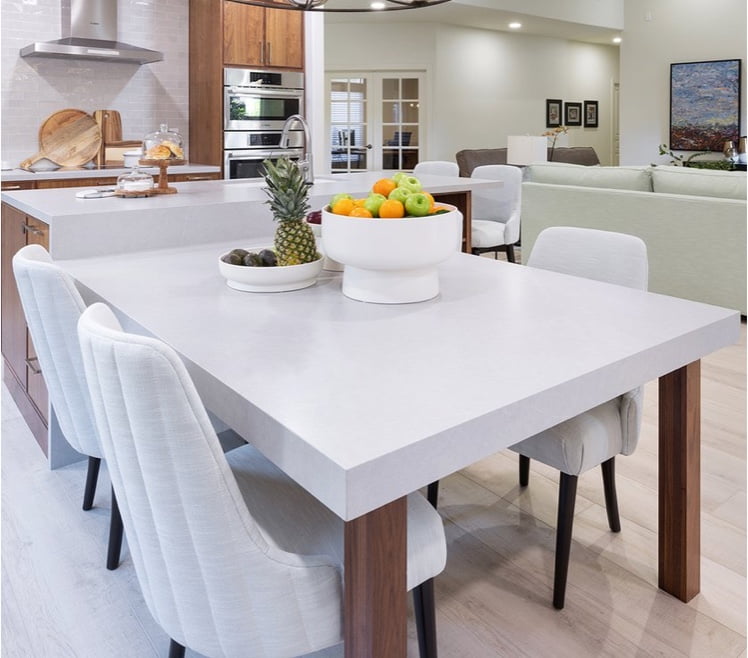
The traditional floor plan tells the story clearly. Large family kitchens. Formal dining rooms for holiday gatherings. Oversized sectionals facing giant televisions. Dual sinks. Expansive breakfast tables with six matching chairs.
Even the language around homeownership reinforces it:
“family home”
“starter home”
“empty nest”
Somewhere along the way, the design industry quietly treated solo living as temporary instead of intentional.
But that assumption no longer reflects reality.
More people than ever are living alone, not just young professionals in city apartments, but divorced women, widows, never-married professionals, and people intentionally choosing independent lifestyles later in life. Yet residential interiors have been surprisingly slow to evolve around this shift.
And honestly? Designing for one creates some of the most thoughtful, personal, and emotionally intelligent homes I have ever seen.
I know because much of my work exists in this exact space.
And truthfully, so does my own life.
The Freedom of Designing Without Compromise
One of the most interesting things about designing for solo clients is how quickly the conversation changes.
There is no committee.
No negotiation over recliners.
No compromise between “his style” and “her style.”
No preserving rooms solely because another family member expects them.
Instead, the questions become much more personal:
How do you actually want to live?
What makes you feel calm?
What routines matter most?
What kind of environment supports the next chapter of your life?
Those answers often lead to incredibly intentional spaces.
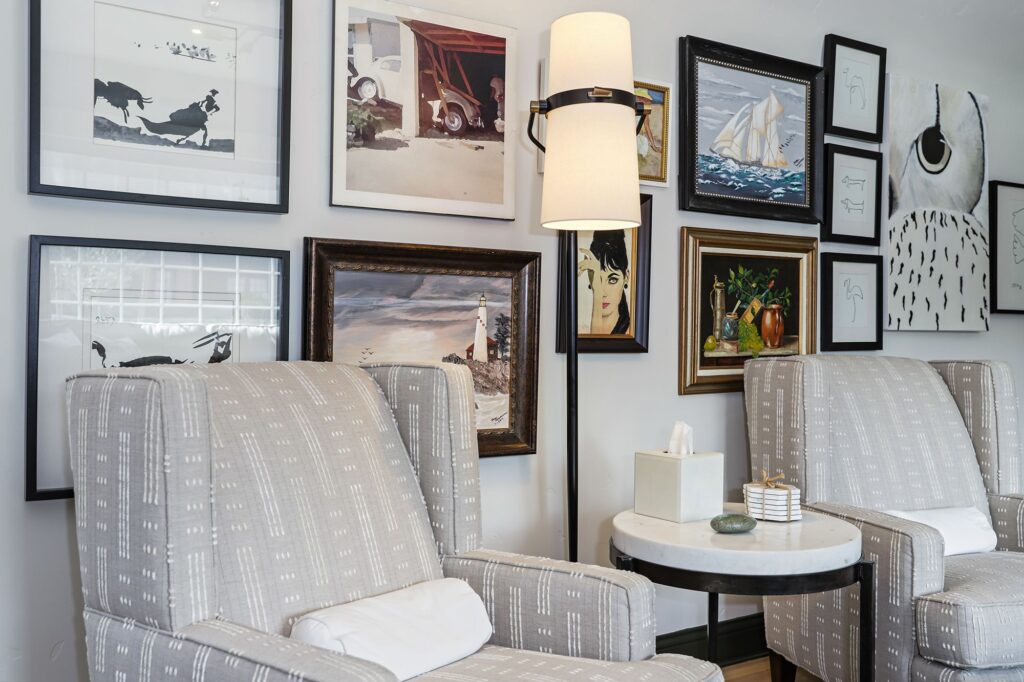
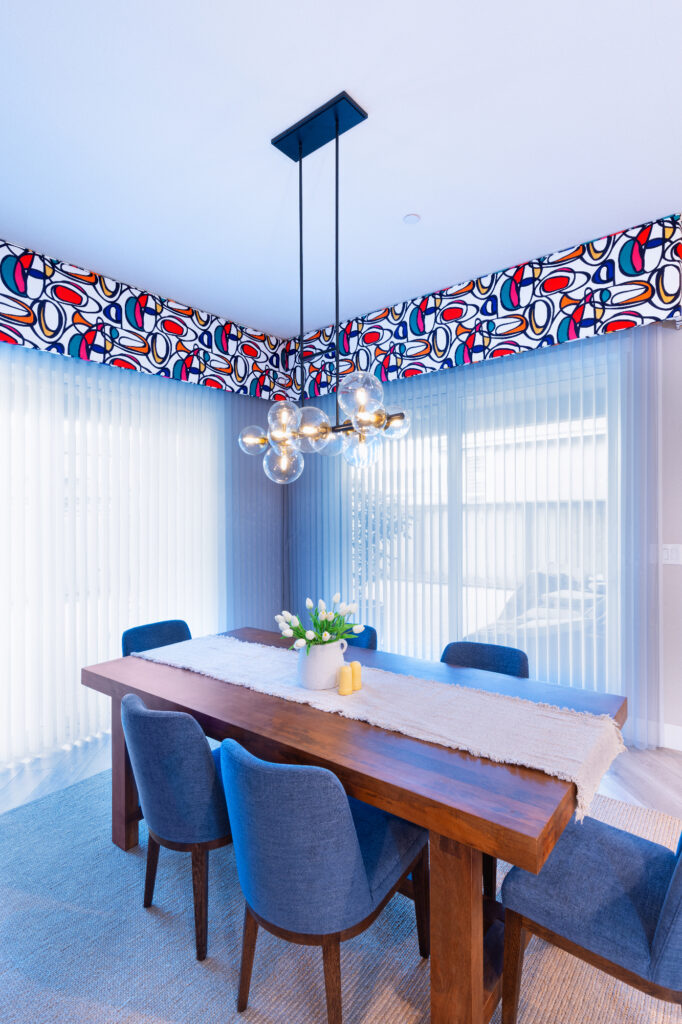
A dining room becomes a reading lounge.
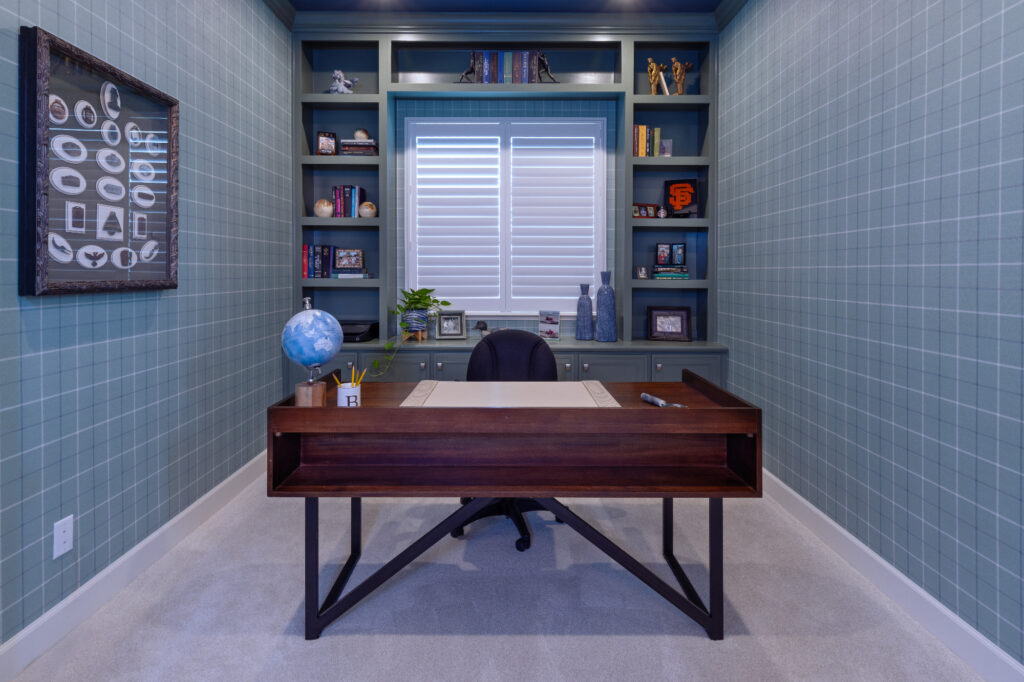
A formal guest room transforms into an art studio.
A kitchen is designed around cooking for one beautifully instead of maximizing seating capacity.
The home starts reflecting the individual instead of the expectation.
Solo Living Is Not a Design Limitation
There has long been an unspoken assumption that designing for one means downsizing emotionally. Smaller life. Smaller ambitions. Smaller home.
I see the opposite.
Many solo clients are actually more decisive and design-forward because they are no longer trying to please everyone else. They know what they like. They are willing to invest in quality. They prioritize comfort and beauty differently.
And perhaps most importantly, they understand that home is not a waiting room for another phase of life.
That mindset changes everything.
Instead of treating the home as temporary or incomplete, they begin designing with intention:
- seating that supports conversation instead of just television viewing
- luxurious bedrooms that feel restorative
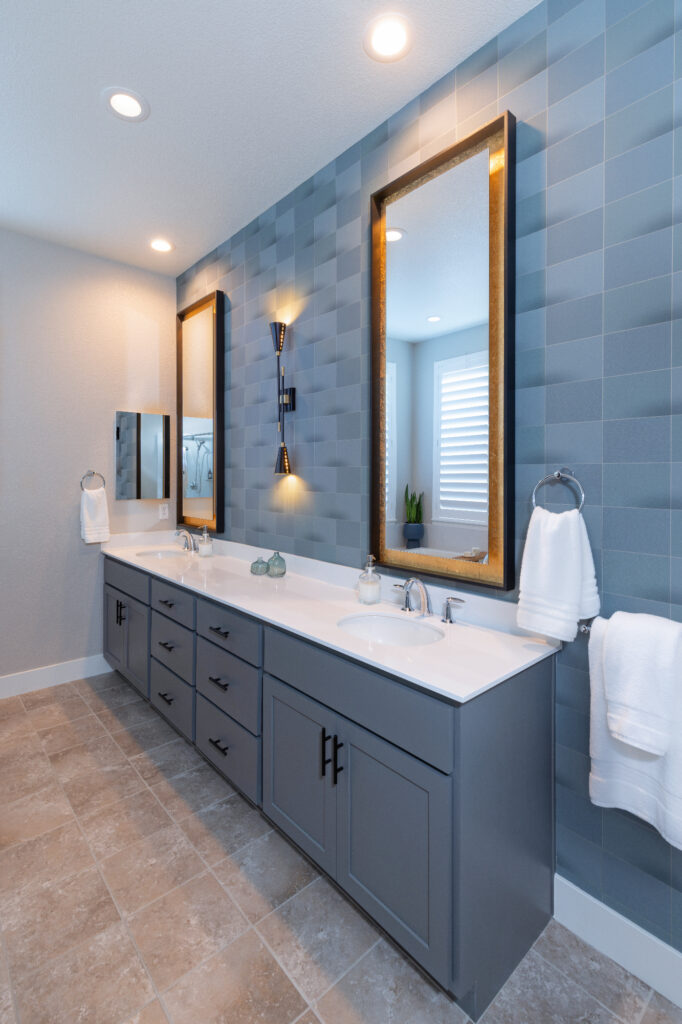
- kitchens that function beautifully for everyday rituals
- spaces dedicated to hobbies, wellness, reading, travel collections, or creativity
The home becomes deeply personal because it finally has permission to be.
Women Are Quietly Reshaping the Market
One of the most overlooked shifts in residential design is the rise of financially independent women creating homes entirely on their own terms.
These clients are not interested in preserving outdated ideas about what a home “should” look like. They are designing around how they want to feel.
Calm.
Empowered.
Grounded.
Sophisticated.
Comfortable.
Many are navigating significant life transitions:
divorce,
widowhood,
relocation,
children leaving home,
career reinvention.
And while those transitions can begin with grief or uncertainty, the design process often becomes something unexpectedly powerful. Not just decorating, but redefining identity.
I have watched clients transform spaces and, in many ways, transform themselves alongside them.
Not because a beautiful sofa changes your life, but because creating an environment that reflects who you are now creates emotional alignment.
The home stops representing the past and starts supporting the future.
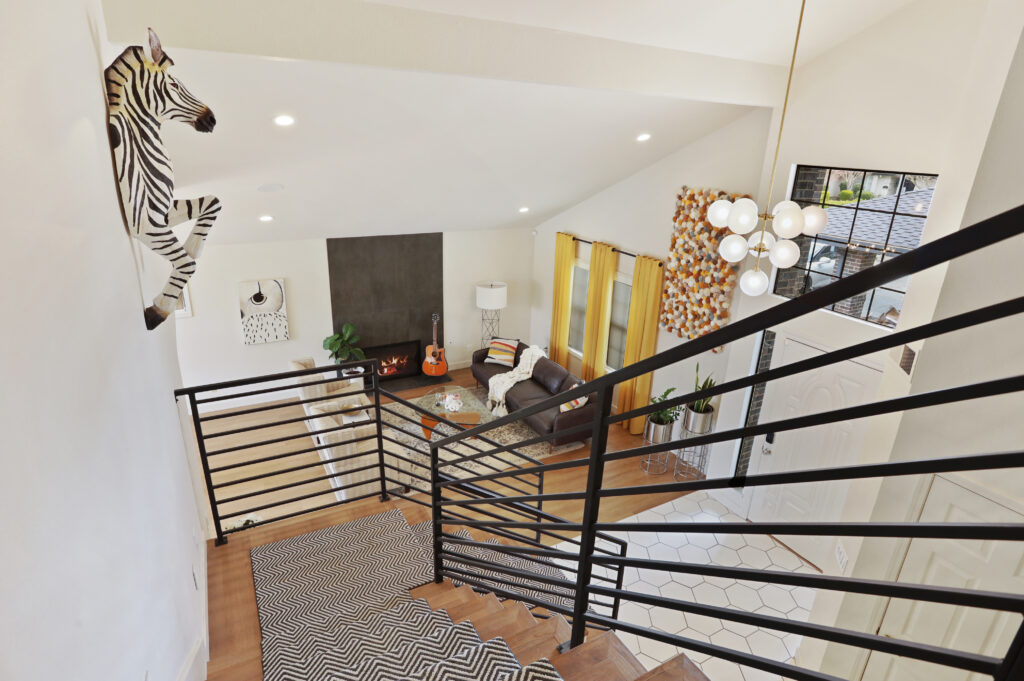
The Emotional Shift From “Starting Over” to “Starting Intentionally”
I think one of the reasons this demographic remains underrepresented in shelter media is because society still frames solo living through the language of loss.
Starting over.
Downsizing.
Moving on.
Many of these homes are not about loss at all.
They are about clarity.
There is something incredibly freeing about designing a home entirely around your own rhythms and preferences. Quiet mornings. Evening yoga. Reading in bed. Hosting intimate dinners. Traveling often and returning to a space that feels restorative instead of demanding.
The priorities become different.
People stop designing for appearances and start designing for emotional ease.
Ironically, those homes often become the most sophisticated because they are rooted in authenticity instead of obligation.
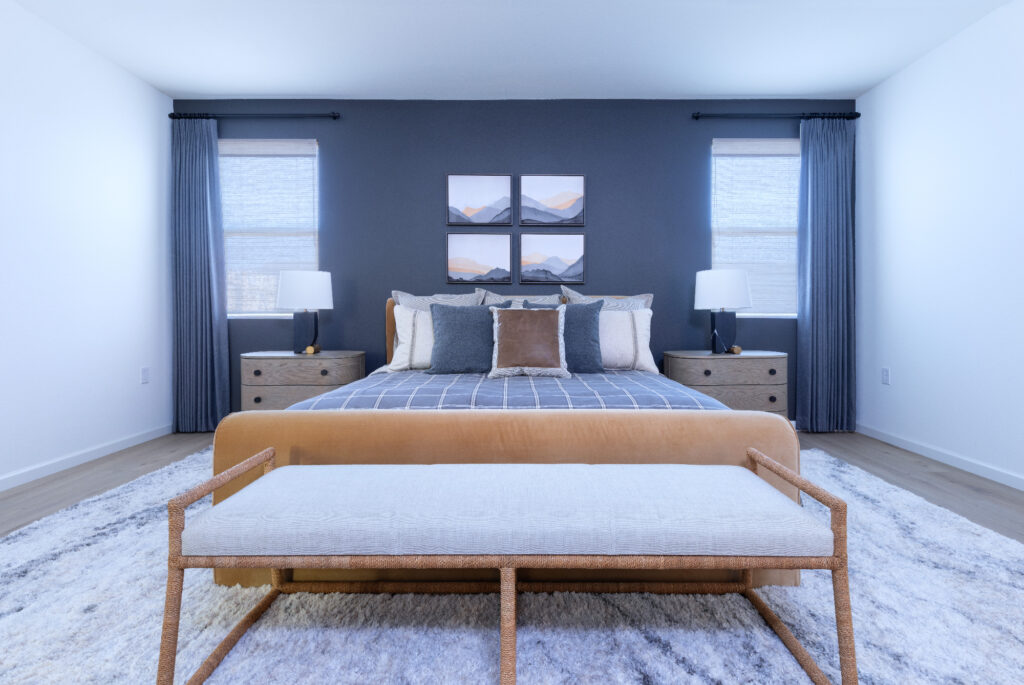
Designing for Real Life
One of the most common things I hear from solo clients is:
“I finally want the house to feel like me.”
Not the version designed around a marriage.
Not the version built around children twenty years ago.
Not the version meant to impress guests.
The real version.
That creates incredibly compelling interiors because personality naturally begins to emerge. Rich color palettes. Collected artwork. Layered textures. Meaningful objects from travel and life experiences.
These homes feel lived-in, not staged.
They support solitude without loneliness.
Comfort without chaos.
Beauty without performance.
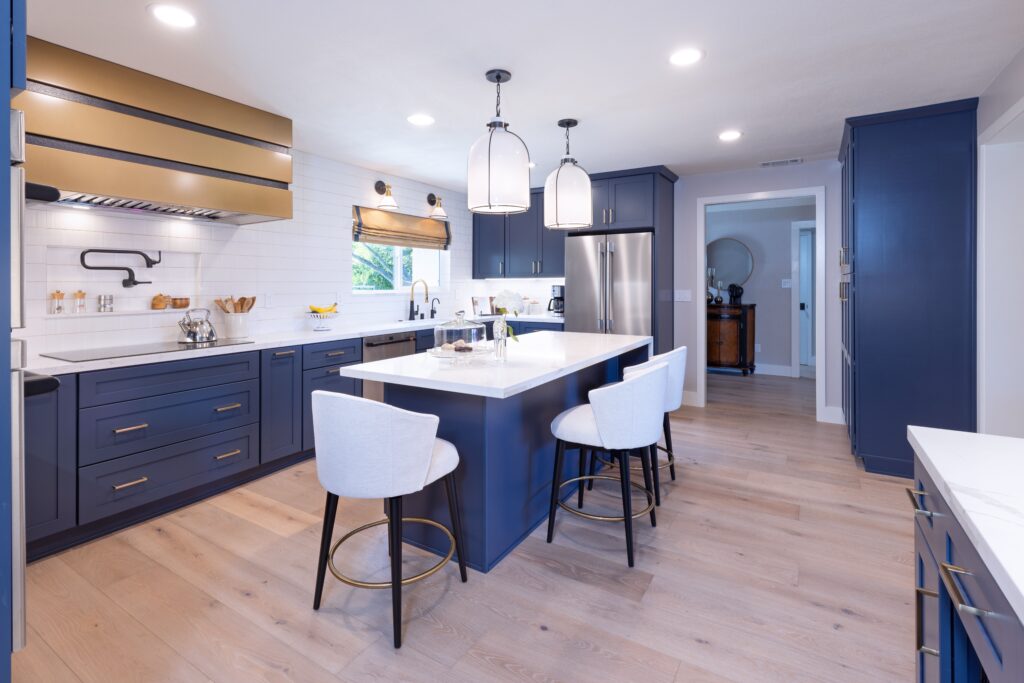
The Future of Residential Design
I believe the design industry is only beginning to understand how much solo living will shape residential interiors moving forward.
Not because people are becoming more isolated, but because people are becoming more intentional.
Homes are evolving away from one-size-fits-all expectations and toward individualized living. Toward spaces that reflect emotional needs, daily rituals, and personal identity.
And in many ways, designing for one may actually represent the future of luxury.
Not excess.
Not square footage.
Not formal perfection.
But the freedom to create a home entirely around the life you genuinely want to live.
If you were designing your home entirely around the life you want now, what would you do differently?
Until Next Time,

Design for the Life You’re Actually Living
KTJ Design Co. creates homes for people entering a new chapter of life. Whether that chapter came by choice or circumstance, your home should support who you are today and how you want to live next.